
Do It Yourself Sod Installation
Helpful “step-by-step” guide to installing your own sod
Sod and Soil Preparation
 STEP 1 - Measure Your Lawn
Measure the area of your lawn; we recommend writing this down. The length x width determines how
many square feet of sod you need.
Delta Bluegrass sod rolls measure 10 square feet each therefore you will need to round up the closest
increment. We recommend ordering 5-10% more of your measurement for odd-shape areas.
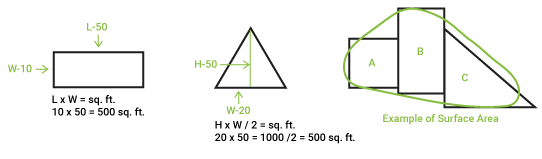
Area B is 15 ft. x 20 ft.
Area C is a triangle
12 ft. x 20/2
TOTAL SOD NEEDED
= 300 sq. ft.
= 120 sq. ft.
= 520 sq. ft.
 STEP 2 - Remove Your Existing Lawn
Prior to installation of new sod, any existing lawn should be chemically killed and removed. Use a sod
cutter which will cut under the turf and slice it into strips. Water the area a few days in advance
to make the soil easier to work. Soil should be moist but not soggy. After removing the old sod, rake
over the soil to remove debris. For best results, water the bare ground for up to a week and re-apply
herbicide to kill off any re-growth.
 STEP 3 - Grading
Work, level, and smooth area with a rake. Make sure the grade is 1/2 inch below driveways, walkways, and border; and 1 inch below sprinkler heads. Roll the area with a lawn roller 1/2 full of water. Lightly irrigate the prepared surface the evening before installation to ensure the soil is moist.
 STEP 4 - Fertilizing
For best results, apply Bolero™ Sod & Seed STARTER fertilizer evenly across the entire area before laying your sod. This specialized formula delivers essential nutrients that help your new lawn establish quickly, promoting strong roots and long-term health.
 STEP 5 - Sod Installation
Install your new sod immediately!
Sod is a live plant and does not have a long shelf life, especially during the hottest months in California. Your sod should be laid directly on the fertilized soil. Start from the back of your property line to front along the longest straight-line. Work away from the line so you’re not stepping on the fresh sod. Make sure sod edges fit tightly together. Always place sod rolls at the edge of your area and work toward the center. Stagger sod slabs (like laying bricks) to offset seams. Should your area be irregular in shape, run a string between stakes in a straight line through the area and begin laying sod along this line. Make sure each piece of sod has good contact with the soil, because air pockets prevent proper rooting. If laying sod on a steep slope, use wooden pegs or sod staples to temporarily keep the sod in place. Sod should be placed horizontal across sloped areas. Trim edges with your sod knife to fit around curves and leave clean, trimmed edges around sprinkler heads, driveways, etc. Avoid cutting sod into short or narrow strips because smaller pieces tend to dry out and fail to root properly.

 STEP 6 - Water
Water new sod immediately!
Proper watering of sod is essential for root establishment. The day of installation, enough water should be applied to penetrate the sod and two inches of native soil. Refer to the Watering Guide for more details.